WORKSHEETS
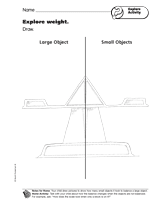
Students explore how many small objects it takes to balance out a large object.
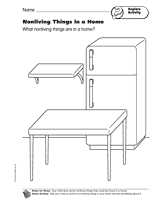
Students draw pictures of non-living things that can be found in a home.
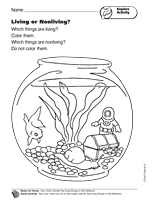
Students color the living items in the picture.
Students take a soil sample and draw the living and non-living things they find in it.
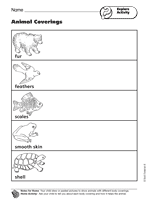
Children draw or paste pictures of animals with different coverings.
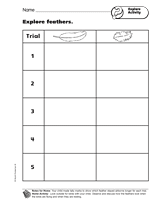
Teacher provides two different feathers, and students use the worksheet to record which stays in the air the longest for…
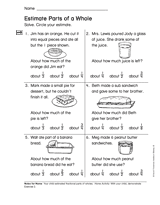
Students study pictures to develop estimates of fractions.
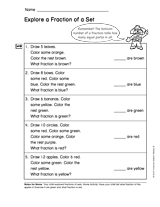
In this printable worksheet, your students will design sets of two things, and then determine what fraction of each the…
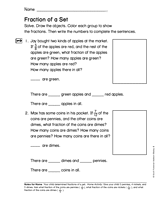
Students experiment with fractions of sets.
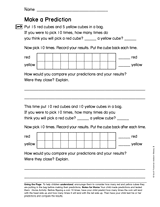
Students experiment with predicting probability.
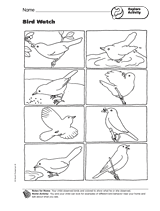
Students observe birds, and then illustrate the actions they observed.
Students draw a picture of what would be a good pet.
Students illustrate how feathers deal with water.
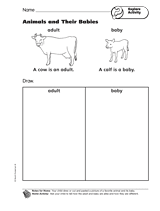
Students draw a picture of a favorite animal and its young.
Students draw a picture of one way that a favorite animal takes care of its young.
Students draw a picture of a bird's nest and show how the bird uses the nest to care for its young.
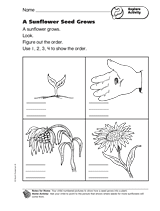
Students number pictures to show how a seed grows into a plant.
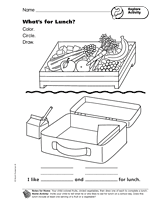
Students color fruits, circle vegetables, and draw one of each to complete a lunch.
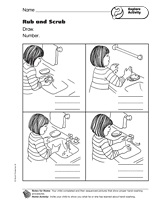
Students complete, and then sequence, pictures that show proper hand washing procedure.
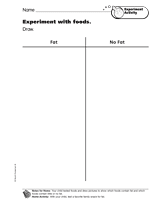
Students test food and then draw pictures to indicate which foods contain no fat, and which foods contain a lot of fat.
ACTIVITIES
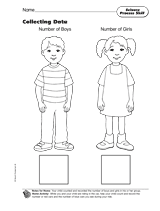
Students explore different ways of representing data that they have collected.
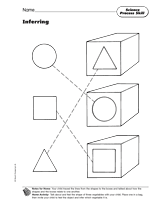
Children use the sense of touch to infer what shape was hidden in a box. They then color a worksheet.
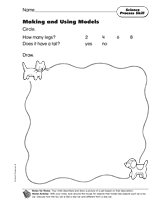
Students make a clay model of an animal, then make a drawing of the animal based on the model.
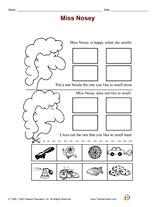
Try a printable science activity that focuses on pleasant and unpleasant smells.